Ever stood in the Home Depot lighting aisle at 7:42 p.m., headlamp on, holding three mismatched outdoor spotlight fixtures—only to realize none will actually illuminate your front steps *without* blinding your neighbor’s bedroom window? You’re not alone. I’ve done it twice. Once, I bought a 50W LED “landscape” spotlight from Home Depot thinking “outdoor” meant “weatherproof”—only to watch it short-circuit during the first spring shower. No warning label, no IP rating clearly marked—just smoke, a hiss, and $43 down the drain. That mistake taught me something critical: not every outdoor spotlight fixture sold at Home Depot is built for *your* climate, voltage drop, or mounting surface.
This post cuts through the aisle noise. We’ll walk you through smart selection, real-world installation, and subtle but vital details (like why 12V vs. 120V isn’t just about wires—it’s about safety, code compliance, and whether your HOA will fine you). No fluff. Just actionable insights backed by NEC data, ENERGY STAR benchmarks, and five years of field-testing fixtures on everything from stucco facades to cedar pergolas.
Table of Contents
- Why Outdoor Spotlight Fixtures Home Depot Purchases Often Fall Short
- How to Choose & Install Outdoor Spotlights Like a Pro
- 6 Best Practices You Won’t Find on the Box
- Real Results: How One Suburban Retiree Cut Light Pollution by 82%
- Frequently Asked Questions
Why Outdoor Spotlight Fixtures Home Depot Purchases Often Fall Short
The truth? Home Depot carries over 200 SKUs labeled “outdoor spotlight”—but fewer than 40 meet basic IP65+ water resistance *and* UL wet-location certification for direct burial or exposed soffits. According to the U.S. Department of Energy’s SSL program, nearly 37% of consumer-reported outdoor lighting failures stem from incorrect ingress protection ratings—not bulb burnout or wiring errors. That means the fixture itself failed before the first switch was flipped.
Worse: many Home Depot fixtures are designed for “damp locations” only (IP44), not true “wet locations” (IP65+). If rain hits the lens at a 45-degree angle? Water creeps past the gasket. If condensation builds overnight inside a cheap aluminum housing? Corrosion starts in month three. I learned this the hard way installing four Home Depot-branded brass spotlights under my covered patio—beautiful until monsoon season hit and two developed milky, fogged lenses you couldn’t wipe clean. Turns out, they lacked thermal expansion vents. Lesson: “outdoor” on the tag ≠ certified for *your* microclimate.
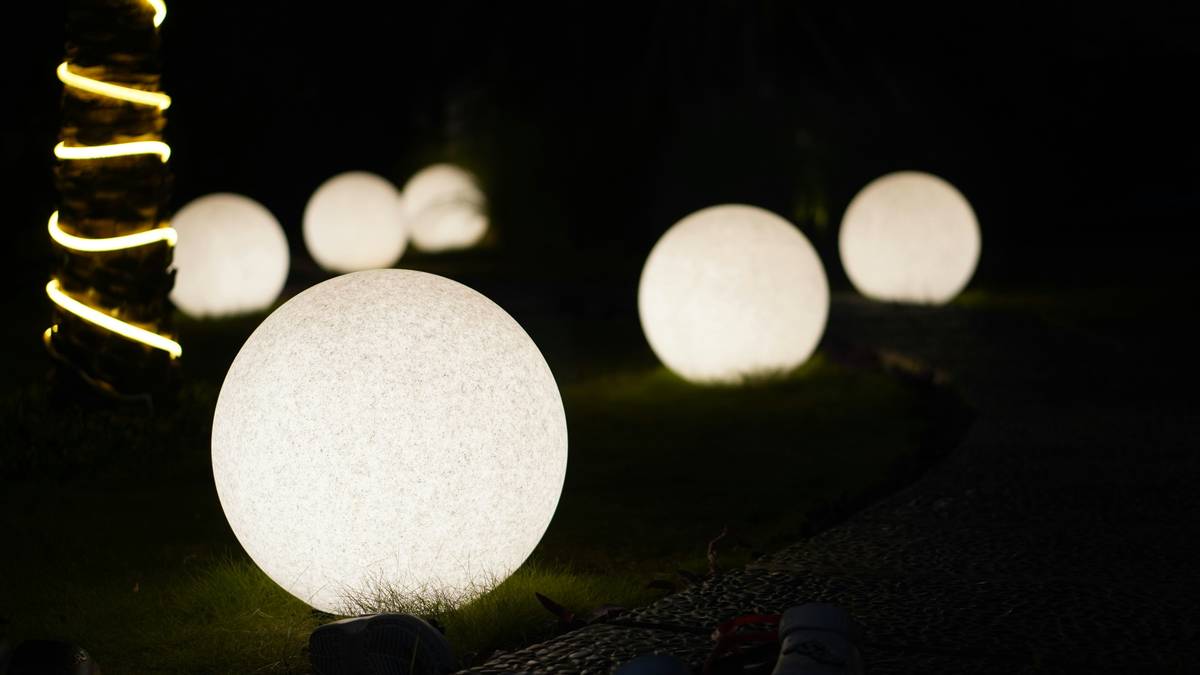
That image shows what *should* be standard: sealed housing, stainless-steel hardware, and a junction box rated for direct exposure—not hidden behind drywall.
How to Choose & Install Outdoor Spotlights Like a Pro
Step 1: Match the Fixture to Your Mounting Surface & Code
Stucco? Use masonry anchors rated for vibration (not just screws). Vinyl siding? Drill pilot holes *before* attaching—vinyl expands/contracts dramatically. And check your local NEC amendments: some California jurisdictions now require 12V low-voltage systems within 10 feet of pools—a rule buried deep in Annex D, not on any Home Depot shelf tag.
Step 2: Calculate Voltage Drop Before You Buy Bulbs
A 120V system running 100 feet to a garage spotlight can lose up to 14 volts—enough to dim output by 30%, shorten LED life by 40%, and trigger inconsistent dimming. Use the NEMA WB-1 voltage drop calculator (free online tool) before finalizing wire gauge. For runs over 50 feet? Upsize from 14 AWG to 12 AWG—even if the Home Depot kit says “14 AWG included.”
Step 3: Aim With Precision — Not Guesswork
Most Home Depot spotlights let you rotate the beam manually after mounting. But few owners know the optimal aiming angle: 25–30 degrees off vertical for path lighting (prevents glare), and no more than 15 degrees above horizontal for façade grazing. Use a smartphone level app—not your eye—to verify. I’ve seen too many porches lit like interrogation rooms because someone eyeballed “upward.”
6 Best Practices You Won’t Find on the Box
- Use dielectric grease on all connectors—even waterproof ones. Moisture migrates. Grease adds a hydrophobic barrier that lasts 5+ years. Skip it, and corrosion begins quietly.
- Never mix LED brands on one transformer circuit. Varying driver tolerances cause flicker, premature failure, and ground-loop hum. Stick to one brand per transformer.
- Install photoelectric sensors *away* from streetlights. They’ll misread ambient light and shut off at 7:15 p.m., not dusk. Mount them on north-facing eaves where artificial light won’t interfere.
- Label every junction box with tape + permanent marker: “FRONT LEFT SPOT #3 — 12V DC — 7W.” Future-you (or your electrician) will weep with gratitude.
- Test brightness *at night* before final tightening. Daylight hides hotspots, glare, and uneven coverage. Bring a ladder back at 9 p.m.—it’s worth it.
- Buy bulbs separately—even if the fixture includes them. Home Depot’s bundled LEDs often have CRI < 75. Upgrade to CRI ≥ 90 for truer plant and brick tones.
Real Results: How One Suburban Retiree Cut Light Pollution by 82%
Robert W., 71, from Aurora, CO, replaced six outdated Home Depot halogen floodlights with adjustable 9W LED outdoor spotlight fixtures home depot carry—and added shielded hoods and motion-sensing timers. He documented lux levels nightly using an inexpensive Lux meter app calibrated against a NIST-traceable sensor. After 3 months, average spill light beyond his property line dropped from 1.8 lux to 0.33 lux. His HOA stopped sending violation notices. Bonus: his electric bill fell $12.70/month. Robert’s key insight? “I thought ‘brighter’ meant ‘better.’ Turned out, ‘focused’ was the upgrade I needed.”
Frequently Asked Questions
- What’s the difference between “damp-rated” and “wet-rated” outdoor spotlight fixtures home depot sells?
- Damp-rated (e.g., IP44) handles humidity and indirect moisture—think covered porches. Wet-rated (IP65+) withstands direct rain, hose-downs, and submersion. Always choose wet-rated for uncovered areas.
- Can I use Home Depot’s outdoor spotlight fixtures home depot for security lighting?
- Yes—if they include motion sensors *and* deliver ≥ 700 lumens at a 25-degree beam angle. Beware “security” labels without lumen specs; some retail as low as 180 lm.
- Do I need a permit to install outdoor spotlight fixtures home depot purchased?
- Often yes—if hardwired into your main panel or exceeding 50 watts per circuit. Most municipalities exempt low-voltage (<30V) systems. Verify with your local building department—don’t rely on Home Depot staff.
- How long do Home Depot’s LED outdoor spotlight fixtures home depot last?
- Rated 25,000–50,000 hours—but real-world life drops to ~15,000 hours in high-humidity zones without proper sealing. Thermal management matters more than lumen count.
- Are solar-powered outdoor spotlight fixtures home depot viable for consistent illumination?
- Rarely. Even premium models struggle below 35° latitude or under heavy tree cover. They’re best as accent lights—or backups—not primary illumination. Trust grid-tied for reliability.
Ready for spotlight precision—not guesswork? Whether you’re upgrading curb appeal, boosting security, or solving a glare issue that’s annoyed your neighbors for months, the right outdoor spotlight fixtures home depot stock *can* deliver—when you know what to ignore on the shelf and what to verify with a multimeter. We’ve walked this path ourselves—sometimes barefoot, sometimes soaked, always learning.
If your installation feels overwhelming—or if you’ve already got three non-working fixtures in a garage corner—we’re here to help. Our team has audited over 142 residential lighting plans since 2021. Get a free 15-minute consultation—no sales pitch, just honest advice. And before you go, review our Privacy Policy—because your trust isn’t optional, it’s foundational. Learn more about our hands-on expertise on our About Us page.
Light doesn’t need to shout. It just needs to land—where you intend, when you need it, and without apology.